

Want the full details? Download the complete case study for an in-depth look at the strategy, execution, and outcomes.
Customer Overview
A Leading U.S. Bank Built around Customers and Communities
Citizens Financial Group, Inc., headquartered in Providence, Rhode Island, is one of the largest regional banking organizations in the United States. The bank serves more than 4 million customers and reported approximately $226 billion in assets in 2025. Its offerings include consumer, commercial, and private banking as well as wealth management services nationwide.
Citizens has earned recognition for both its business performance and its workplace culture, including being named The Banker’s U.S. Bank of the Year in 2025, achieving a perfect score on the Human Rights Campaign 2026 Corporate Equality Index, being listed as one of Newsweek’s Most Charitable Companies, and being recognized among Glassdoor’s 2026 Best Places to Work in Consulting, Finance & Insurance.
Competing for Talent Amid AI and Changing Workforce Expectations
Citizens recognized that TA was entering a period of significant transformation. Competition was intensifying across banking, tech, data, cyber, and emerging skill areas, while candidate expectations continued to evolve toward faster, more personalized, and increasingly digital experiences.
At the same time, AI was reshaping both sides of the hiring equation. Candidates were changing how they searched for jobs and presented their skills, while employers were adopting new technologies to improve efficiency and decision-making. For Citizens, the challenge was not simply adopting more technology but determining how to use it while preserving the human, relationship-driven nature of recruiting.
“We are at an inflection point that we will remember,” said Mary Anne Pelland, EVP, Head of Talent Acquisition at Citizens. “Talent acquisition has been built on relationships. We want to optimize technology as much as we can without losing the soul of what we do.”
Citizens also recognized that recruiters needed to evolve beyond transactional process execution toward strategic talent advising, requiring stronger business acumen, data-driven decision-making, and closer integration with talent development and workforce planning. These forces prompted Citizens to redesign TA as an integrated, human-centered, AI-enabled function in which recruiter capability, hiring quality, employer branding, internal talent, and technology work together to create a more strategic approach to talent.
Building a Human-Centered TA Function
Rather than launching a series of disconnected talent initiatives, Citizens deliberately redesigned talent acquisition as an integrated system. Investments in recruiter capability, structured hiring, employer branding, and AI were designed to reinforce one another, creating a more human-centered, data-informed, and strategically connected TA function.
Reimagining the Role of the Recruiter as a Talent Advisor
The Talent Advisor model became the human foundation of Citizens’ TA approach. Citizens recognized that the future of TA would require recruiters to move beyond transactional recruiting activities and become strategic advisors to the business. This shift required new capabilities, role expectations, and operating models. Citizens launched an extensive talent advisor journey, investing more than 18 months in developing recruiters’ strategic consulting
capabilities, business acumen, and ability to leverage data and market intelligence in hiring discussions.
Citizens deliberately created additional capacity so recruiters could spend more time acting as talent advisors rather than process coordinators. Digital assessments streamlined candidate evaluation, helping recruiters focus on the candidates most likely to succeed. AI-enabled tools now generate behavioral interview guides, labor market insights, and hiring strategy recommendations for managers, while interview scheduling is automated and a chat
assistant embedded into the career website helps address candidate questions. “AI is part of the workflow versus something that’s bolted on to the workflows,” explained Kristin McMillen, SVP, Head of Talent Acquisition Strategy at Citizens. “If our people cannot work with these technologies in the right way, we’re still not going to get the lift and the experience that we want to deliver.”
Increasing Precision through a Shared Hiring Blueprint
To complement stronger recruiter capabilities, Citizens redesigned how hiring decisions are made. As candidate behavior evolved and gen AI increasingly shaped resumes and applications, traditional evaluation approaches became less effective. “We are seeing the sea of sameness,” explained Pelland. “The richness of the data we used to get from resumes is gone.”
In response, Citizens introduced a structured Hiring Blueprint to improve consistency, fairness, and evidence-based decision-making throughout the hiring process. The blueprint establishes shared expectations for recruiters and hiring managers across strategy alignment, sourcing, market calibration, interview design, evidence-based interviewing, and structured debriefs. See Figure 1 on the next page.
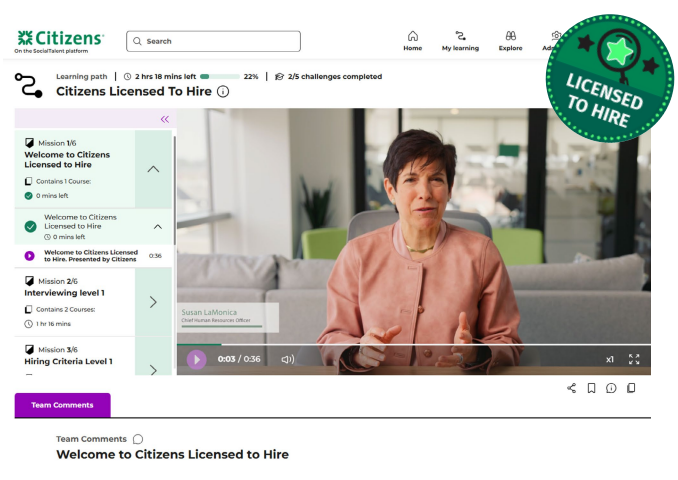
At the same time, Citizens launched its Licensed to Hire program, giving hiring managers practical guidance on behavioral interviewing, skills assessment, and candidate evaluation in an increasingly AI-enabled labor market. This initiative also reinforced Citizens’ broader skills-based talent
philosophy. See Figure 2.
Talent acquisition, talent development, and rewards leaders aligned around three foundational capabilities expected across the organization: customer centricity, learning agility, and persistence and tenacity. These capabilities were embedded into interview guides, behavioral questions, and evaluation criteria, helping managers move beyond proxies such as years of experience and degrees to assess demonstrated capability and potential.
FIGURE 1: Citizens’ Hiring Blueprint
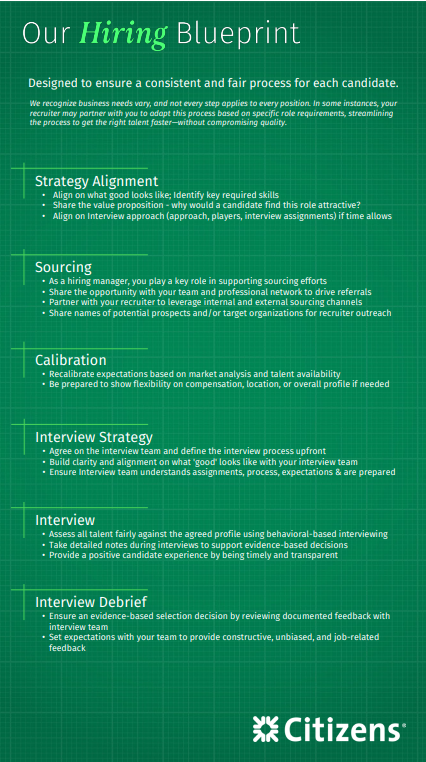
FIGURE 2: Citizens’ Licensed to Hire Program
Reimagining the Role of the Recruiter as a Talent Advisor
Citizens deliberately adopted a disciplined approach to technology investments, focusing on solutions that reduce friction, create capacity, and improve stakeholder experiences rather than pursuing technology for its own sake. Across the recruiting lifecycle, Citizens introduced conversational AI, automated interview scheduling, assessments, AI-enabled candidate matching, labor market intelligence, and analytics dashboards. These capabilities simplified experiences for candidates, recruiters, and hiring managers while freeing TA professionals to spend more time on strategic activities.
Employer branding and talent discovery became a particular focus. Citizens had long viewed its career site as a core component of its TA infrastructure, but the emergence of gen AI introduced new challenges. Candidates increasingly used platforms such as ChatGPT, Copilot, and other AI-enabled
tools to search for jobs and learn about employers rather than visiting career sites directly. For Citizens, this created a unique challenge: hundreds of financial institutions across the United States include “Citizens” in their names, increasing the risk that candidates could receive incomplete or inaccurate information about the organization.
Working closely with AI-native TA technology provider Radancy, Citizens shifted from traditional search engine optimization toward answer-engine optimization, creating richer content and employer narratives designed to help AI platforms accurately represent the organization’s culture, values, opportunities, and differentiators. Citizens also developed broader career content to attract applicants while helping individuals navigate their careers and better understand the labor market. “How candidates search for roles and learn about companies is changing,” said McMillen. “We wanted to ensure that what candidates were seeing accurately reflected who we are.”
Citizens also leveraged Radancy’s AI-powered TA capabilities to optimize talent attraction through data-driven experimentation, audience targeting, and prospective advertising. Despite relatively flat investment levels, the organization continued to generate strong hiring outcomes, with approximately 10% to 15% of hires influenced through these initiatives. This longstanding partnership also helped reduce noise, improve candidate self-selection, and create the conditions for more impactful, less transactional screening, scheduling, and interviewing.
Citizens viewed technology not as a replacement for human connection but as an enabler of it. “We got wowed and wooed by technology but came back to the experience,” reflected Pelland.
The Results: Improving Speed, Hiring Quality, and TA Impact
Citizens’ human-centered, AI-enabled talent acquisition transformation has delivered measurable gains in hiring efficiency, recruiter capability, and employer brand visibility. Investments in automation and process redesign have significantly improved hiring speed.
In key high-volume segments such as bankers, tellers, and call center specialists, Citizens achieved approximately 25% faster hiring and reduced time to interview by four days. Notably, 35% of banker and teller requisitions now move to offer in less than 14 days.
AI adoption is also widespread: 98% of the TA team actively uses AI-enabled capabilities in its daily workflows. Recruiters use AI to generate behavioral interview guides, develop hiring strategy presentations, and provide hiring managers with labor market intelligence and insights into emerging and declining skills. Citizens plans to expand AI into resume signal identification and pipeline management, with the potential to create approximately 4,000 hours of annual capacity for higher-value advisory activities.
At the same time, Citizens strengthened the quality and consistency of hiring decisions. By the end of 2025, approximately 80% of hiring managers had completed the Licensed to Hire program, meeting the organization’s goal and reaching participation levels typically seen only in compliance training.
Early indicators also suggest that the Talent Advisor model is strengthening business confidence in TA. In Q2 2026, hiring manager perceptions of TA as a strategic business partner increased five percentage points year over year, while perceptions of a fair, evidence-based hiring process increased four points. The strongest results came from business areas that had implemented the full Hiring Blueprint approach.
Citizens also increased the effectiveness of its employer brand and talent attraction efforts. Recruitment marketing initiatives now influence 10% to 15% of hires, while the Radancy platform has contributed to an estimated 38% increase in organic impressions. These gains have enabled Citizens to compete effectively despite relatively flat recruitment marketing investment and a smaller employer branding team than many peers.
Next Steps: Expanding on the Future-Ready Talent Ecosystem
In the next phase of its journey, Citizens is working to connect external hiring with internal talent development, positioning TA as an integrated pillar in its broader talent strategy. While this integration is still evolving, Citizens has established shared skills frameworks and launched Talent Matters, an internal talent marketplace designed to strengthen connections among hiring, development, and internal mobility. The marketplace helps employees understand their skills and career aspirations, explore future career paths, identify capability gaps, and pursue development opportunities aligned with organizational needs. “We don’t treat recruiting as simply filling jobs,” explained Pelland. “We are cultivating talent beyond the reactive space of recruiting.”
Citizens will also continue to evolve its Talent Advisor model, expand AI capabilities across TA workflows, and strengthen hiring precision and workforce planning. The organization will continue to invest in recruiter capabilities so talent professionals can effectively use AI, data, and labor market insights while maintaining the human judgment and relationship-building skills essential to effective hiring. Citizens also plans to further embed its Hiring Blueprint and Licensed to Hire approaches into everyday practices, reinforcing consistency and evidence-based decision-making across the organization.
Beyond TA, Citizens is exploring how AI will reshape workforce strategy, including implications for early-career talent, future skills, and evolving work models. “As AI continues to evolve, we are trying to understand what the future of talent looks like and how we prepare for it,” said McMillen. “We can’t wait, because if you wait, you’re late.” Ultimately, Citizens aims to build a talent ecosystem that combines technology, skills, and human connection to
support both organizational performance and long-term workforce resilience.
Lessons Learned:
Citizens’ approach demonstrates that the future of talent acquisition is not defined by technology alone. Sustainable transformation requires redesigning TA as an integrated ecosystem. By maintaining its human-centered philosophy while embracing innovation, Citizens has strengthened both hiring effectiveness and strategic impact. Key lessons include:
Redesign talent acquisition around experience not technology.
Technology creates the greatest value when it reduces friction, strengthens relationships, and enables higher-value work rather than simply automating existing processes.
Elevate recruiters into strategic talent advisors.
Building business acumen, analytical capabilities, and labor market expertise enables recruiters to move beyond requisition fulfillment and become trusted workforce advisors
Create greater precision in hiring decisions.
Structured hiring frameworks, shared skills definitions, and hiring manager enablement can improve consistency, fairness, and decision quality in an AI-enabled labor market.
Connect external hiring with internal capability building.
Integrating talent acquisition, talent development, and internal mobility creates a stronger foundation for long-term workforce resilience and talent density.
Extend the employer brand across emerging discovery channels.
As candidates increasingly use gen AI tools to learn about organizations and opportunities, employers must ensure their brand, culture, and value proposition are accurately represented across digital channels.
Ready to transform your talent acquisition strategy?
Discover how Radancy can help you build a connected, data-driven hiring ecosystem that delivers measurable results.
Get in touch with our team today to start reimagining your candidate experience.
